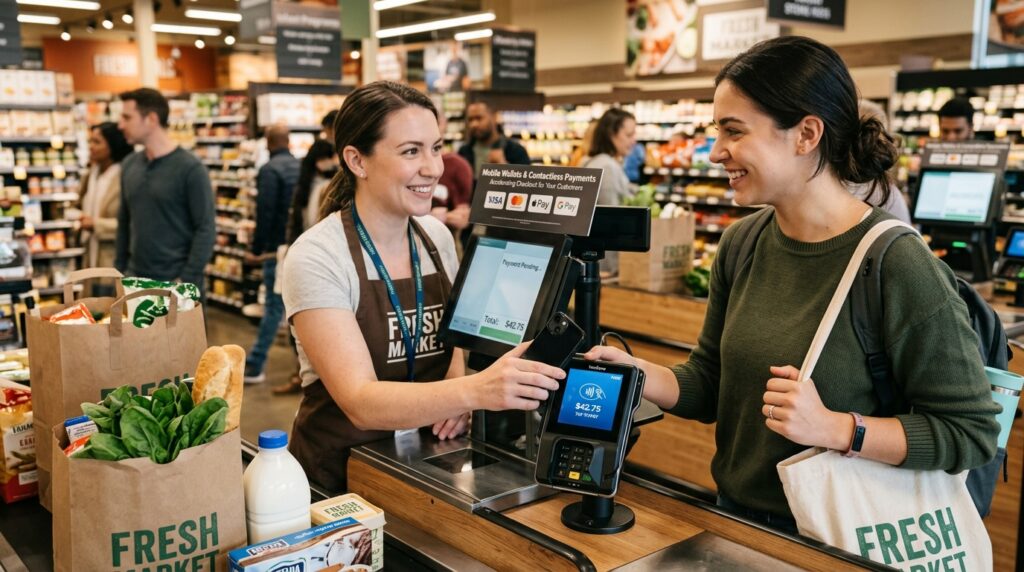
Consumers expect payments to be quick, secure, and convenient. Whether shopping online, ordering food, or paying in-store, customers increasingly prefer tapping their phones or smartwatches over swiping cards or handling cash. For businesses, this shift is more than a payment trend—it’s an opportunity to improve customer experience, reduce checkout friction, and increase sales.
Mobile wallets and contactless payments have transformed how merchants process transactions. From accepting Apple Pay at a local café to enabling Google Pay on an eCommerce store, businesses that adopt modern payment methods can stay competitive while offering the fast, seamless checkout experiences customers demand.
In this guide, we’ll explore how mobile wallets work, why contactless payments are growing rapidly, and how small businesses can implement these technologies effectively.
What Are Mobile Wallets and Contactless Payments?
A mobile wallet is a digital payment application that stores customers’ payment information securely on their smartphones, tablets, or wearable devices. Popular mobile wallets include:
● Apple Pay
● Google Pay
● Samsung Wallet
● PayPal
Contactless payments allow customers to pay by tapping a card or device near an NFC-enabled payment terminal. NFC stands for Near Field Communication, a wireless technology that securely exchanges payment information between devices.
Instead of inserting a card and entering a PIN, customers simply hold their phone or contactless card near the terminal to complete the purchase within seconds.
Why Mobile Wallet Adoption Is Growing
The popularity of mobile wallet payments has surged over the last few years due to several factors:
1. Faster Checkout Experiences
Consumers value convenience. Contactless transactions typically take only a few seconds, helping businesses reduce queues and improve customer satisfaction.
This is especially beneficial for:
● Restaurants
● Retail stores
● Coffee shops
● Grocery stores
● Event venues
A faster checkout process means businesses can serve more customers during peak hours.
2. Improved Security
Mobile wallets use tokenization, which replaces sensitive card information with encrypted digital tokens. This helps reduce fraud risks because merchants never receive or store the customer’s actual card number.
Additionally, many mobile wallets require:
● Face recognition
● Fingerprint authentication
● Device passcodes
These added layers of protection make mobile wallets safer than traditional magnetic stripe cards.
3. Increased Consumer Preference
Younger consumers, particularly Gen Z and millennials, increasingly expect businesses to support digital payment options. Many customers actively look for merchants that accept Apple Pay or Google Pay before making purchases.
Businesses that fail to offer modern payment methods risk losing customers to competitors.
4. Growth of Tap-to-Pay Technology
Banks and payment providers have accelerated the rollout of contactless cards and NFC payment terminals globally. Customers are becoming more comfortable using tap-to-pay methods for everyday purchases.
Benefits of Accepting Mobile Wallet Payments for Small Businesses
Better Customer Experience
Convenience plays a major role in customer satisfaction. A smooth checkout process reduces friction and encourages repeat business.
Customers appreciate:
● Shorter wait times
● Fewer payment errors
● Easy digital receipts
● Secure transactions
Higher Conversion Rates
Online businesses often experience lower cart abandonment rates when offering mobile wallet checkout options.
Why? Because mobile wallets:
● Eliminate manual card entry
● Autofill billing details
● Speed up mobile checkout
This is particularly valuable for eCommerce businesses with mobile shoppers.
Enhanced Security and Fraud Protection
Since mobile wallets use encrypted payment tokens instead of actual card data, businesses can reduce exposure to fraud and data breaches.
Many payment processors also provide additional fraud monitoring tools for contactless and mobile wallet transactions.
Competitive Advantage
Accepting contactless payments signals that your business is modern and customer-focused. This can help attract tech-savvy consumers who prioritize convenience.
How NFC Payment Terminals Work
NFC payment terminals enable contactless communication between payment devices and the terminal itself.
Here’s how a typical transaction works:
- The customer opens their mobile wallet.
- They authenticate using Face ID, fingerprint, or PIN.
- The customer taps their phone or contactless card near the terminal.
- The payment processor securely authorizes the transaction.
- The transaction is completed in seconds.
Businesses need compatible hardware and payment processing services to accept these payments.
Choosing the Right Contactless Payment Solution
When selecting a payment solution, businesses should consider several important factors.
Compatibility
Ensure your payment terminal supports:
● NFC technology
● Mobile wallets
● EMV chip cards
● Contactless credit card processing
Most modern payment terminals already include these features.
Integration with POS Systems
Your contactless payment system should integrate seamlessly with your:
● Point-of-sale system
● Accounting software
● Inventory management tools
● eCommerce platform
Integration reduces manual work and improves operational efficiency.
Transaction Fees
Compare payment processing fees carefully. While mobile wallet transactions often have similar pricing to standard card payments, fees can vary by provider.
Look for:
● Transparent pricing
● No hidden charges
● Scalable plans for growing businesses
Security Features
Choose providers that offer:
● PCI compliance
● End-to-end encryption
● Tokenization
● Fraud detection tools
Security is essential for protecting customer data and maintaining trust.
Accepting Apple Pay for Small Businesses
Many consumers specifically look for businesses that accept Apple Pay because of its speed and convenience.
To accept Apple Pay, businesses typically need:
● An NFC-enabled payment terminal
● A compatible payment processor
● Updated POS software
Apple Pay can be used:
● In-store
● In mobile apps
● On websites
For eCommerce merchants, enabling Apple Pay can significantly simplify checkout on mobile devices.
Benefits include:
● Faster mobile checkout
● Reduced cart abandonment
● Strong customer trust
● High security standards
Google Pay Merchant Integration
Google Pay offers similar advantages for businesses looking to improve digital payment experiences.
Merchants can integrate Google Pay into:
● Retail POS systems
● Android apps
● Online checkout pages
Customers benefit from:
● Quick authentication
● Stored payment credentials
● Simplified checkout flows
For businesses with significant Android user traffic, Google Pay can improve conversion rates and customer satisfaction.
Contactless Credit Card Processing vs Traditional Payments
Traditional card payments often require:
● Card insertion
● PIN entry
● Signature verification
Contactless processing simplifies this experience dramatically.
Key Differences
| Traditional Payments | Contactless Payments |
| Slower checkout | Faster checkout |
| Physical card handling | Tap-and-go convenience |
| Higher wear on terminals | Less physical interaction |
| Longer queues | Improved customer flow |
Businesses with high transaction volume can especially benefit from reduced checkout times.
Mobile Wallets in eCommerce
Mobile wallets are no longer limited to physical stores. Online merchants increasingly use digital wallets to streamline checkout.
Popular integrations include:
● Apple Pay
● Google Pay
● PayPal
● Shop Pay
These payment methods help reduce friction by allowing customers to complete purchases without entering lengthy payment details manually.
This is particularly important on smartphones, where typing card information can be cumbersome.
Industries Benefiting Most from Contactless Payments
While nearly every industry can benefit, some sectors see especially strong advantages:
Retail
Retailers can reduce checkout lines and increase transaction speed during busy periods.
Restaurants and Cafés
Fast service environments benefit greatly from quick tap-to-pay experiences.
Transportation
Transit systems and rideshare services increasingly rely on contactless payment systems.
Healthcare
Contactless payments can reduce physical interaction at reception desks and billing counters.
Events and Entertainment
Concerts, sports venues, and festivals can process large crowds more efficiently using NFC technology.
Common Concerns About Mobile Wallet Payments
Are Contactless Payments Secure?
Yes. Mobile wallet payments use multiple layers of security, including:
● Encryption
● Tokenization
● Biometric authentication
In many cases, they are more secure than traditional card payments.
Do Small Businesses Need Expensive Equipment?
Not necessarily. Many modern NFC payment terminals are affordable and easy to deploy. Some providers even offer mobile card readers that support contactless payments.
Will Customers Actually Use Them?
Consumer adoption continues to grow rapidly. Many customers now expect businesses to accept contactless payments as a standard option.
Future Trends in Digital Payments
The future of payment processing is becoming increasingly digital, mobile, and contactless.
Emerging trends include:
● Wearable payments
● QR code payments
● Biometric authentication
● AI-driven fraud detection
● Embedded finance solutions
As payment technology evolves, businesses that adapt early will be better positioned to meet changing customer expectations.
Final Thoughts
Mobile wallets and contactless payments are reshaping the customer checkout experience. Faster transactions, improved security, and growing consumer demand make these technologies essential for modern businesses.
Whether you operate a retail store, restaurant, or eCommerce business, accepting Apple Pay, Google Pay, and contactless credit card payments can help improve efficiency, increase customer satisfaction, and drive more sales.
As digital payment adoption continues to grow, investing in NFC payment terminals and mobile wallet support is no longer just a convenience—it’s becoming a competitive necessity.
FAQ’S
Q: How can mobile wallets help reduce shopping cart abandonment on mobile devices?
A: Mobile wallets simplify the checkout process by eliminating the need for customers to manually enter card and billing information. With faster authentication and stored payment credentials, shoppers can complete purchases in just a few taps. This streamlined experience helps businesses increase conversions and reduce cart abandonment, especially among mobile users.
Q: What should small businesses look for when choosing a contactless payment solution?
A: Small businesses should prioritize NFC compatibility, POS integration, transparent transaction fees, and strong security features such as tokenization and encryption. Choosing a payment solution that works seamlessly with existing business systems can improve efficiency while providing customers with a fast and secure checkout experience.
Q: Why do customers prefer Apple Pay and Google Pay over traditional card payments?
A: Customers often prefer Apple Pay and Google Pay because they offer quicker transactions, enhanced security, and greater convenience. Features such as biometric authentication, stored payment information, and tap-to-pay functionality allow purchases to be completed within seconds, creating a smoother shopping experience across both online and in-store environments.
Q: Are contactless payments a good investment for high-traffic businesses like restaurants and retail stores?
A: Yes, contactless payments can be particularly valuable for businesses that serve large numbers of customers. Faster transaction times help reduce queues, improve customer flow during peak hours, and enhance overall service efficiency. Businesses can serve more customers while creating a more convenient checkout experience that encourages repeat visits.